Lived Lens Storytelling Program: Young people telling their own stories, with professional filmmakers beside them.
Not stories about young people. Stories by them.
What is Lived Lens?
Lived Lens is a collaborative storytelling program delivered with frontline organizations, shelters, schools and community groups. We teach young people the craft of visual storytelling — what a story is, whose it is to tell, and how to tell it — and then give them the equipment, the time and the support to make one.

How the Program Works
1. Story circles, safety first Facilitated circles led with trauma-informed practice. Participants choose what to share, what to hold back, and how they want to be represented. Nothing moves forward without them.
2. Hands-on film and media training Practical workshops in writing, camera, sound, performance and editing. Designed for all levels — no prior experience needed.
3. Co-creation, not extraction Every story is developed together, with clear consent, anonymity options and shared decision-making. The mentorship is real: participants work alongside people who do this for a living, and leave with skills that open a door into the industry.
4. Films with a purpose The finished pieces are high-quality short films and campaign assets your organization can use for education, fundraising, training and advocacy — always with participant approval.
-
The method doesn't change. The story does. Lived Lens has been built with and for:
Young people in mentorship and community programs
Survivors of human trafficking and exploitation
Newcomer and racialized young people
LGBTQ2S+ young people
Young people navigating housing instability or system involvement
We work with the community our partner already serves, at whatever scale suits the organization — from a single workshop to a full cohort.
-
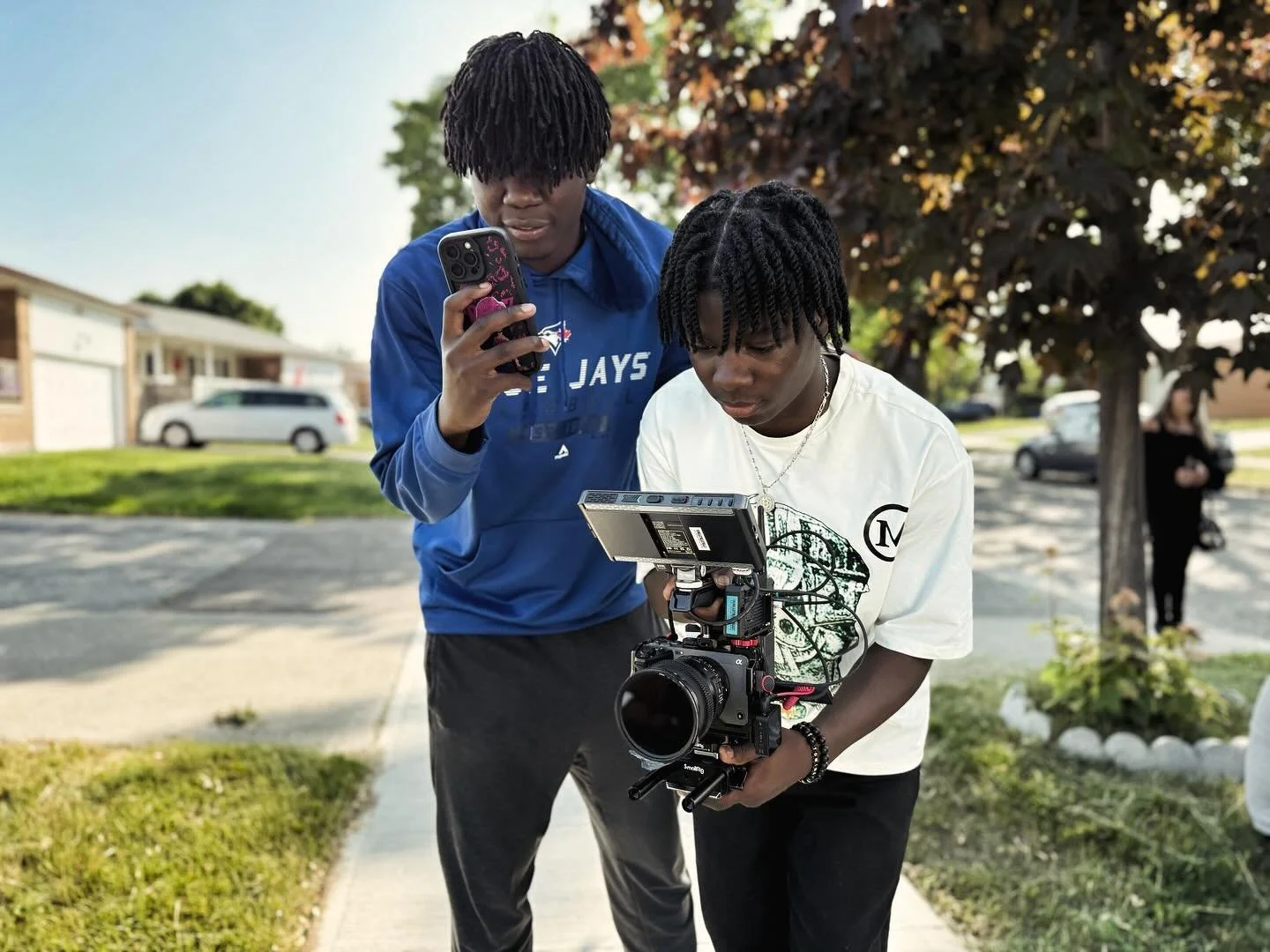
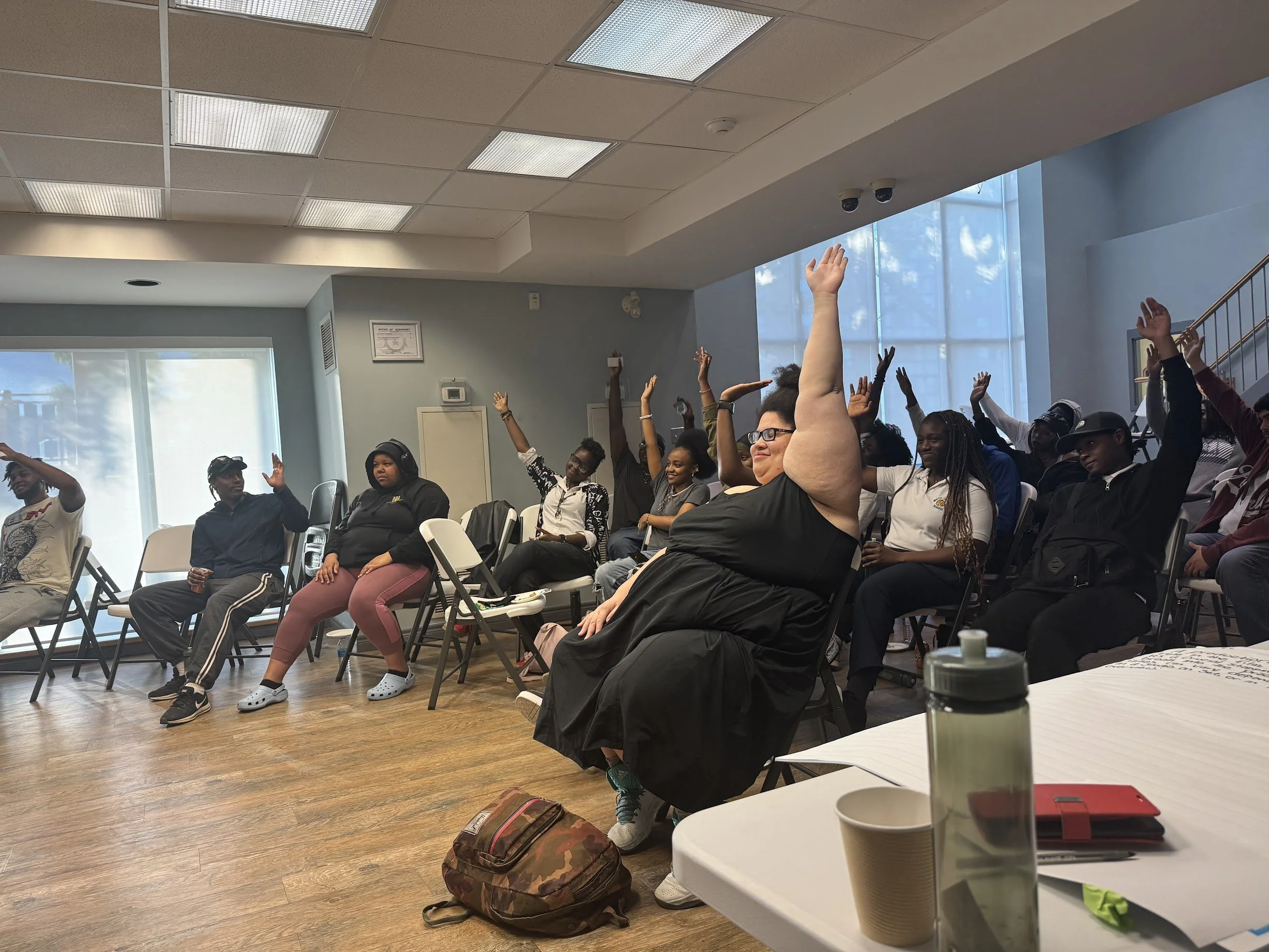
CACD Summer FLAME Programme, 2026. A two-hour visual storytelling workshop for approximately fifty students, delivered on behalf of MAC. We opened with a screening, broke down how framing and composition carry meaning, then sent students out with their phones to shoot their own visual stories.
The turning point was small and structural. Rather than critiquing the work from the front of the room, we put the question to the students as an audience: did the message come through? Letting them judge each other's work as viewers, instead of being told what worked, is what broke the ice.
They opened up fast. Several started sharing earlier work of their own, unprompted — which says as much about the environment CACD built with that group as it does about the session.
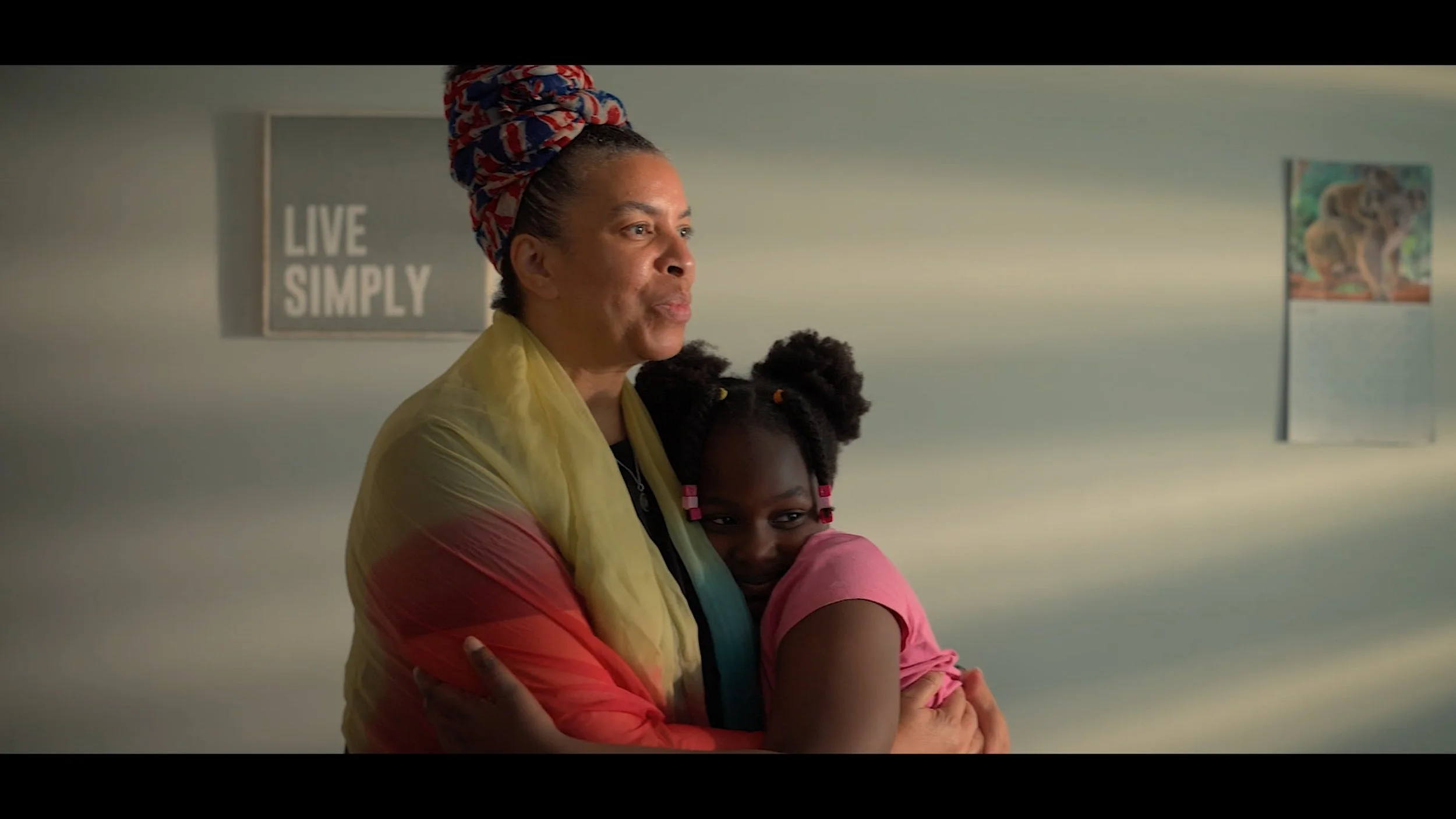
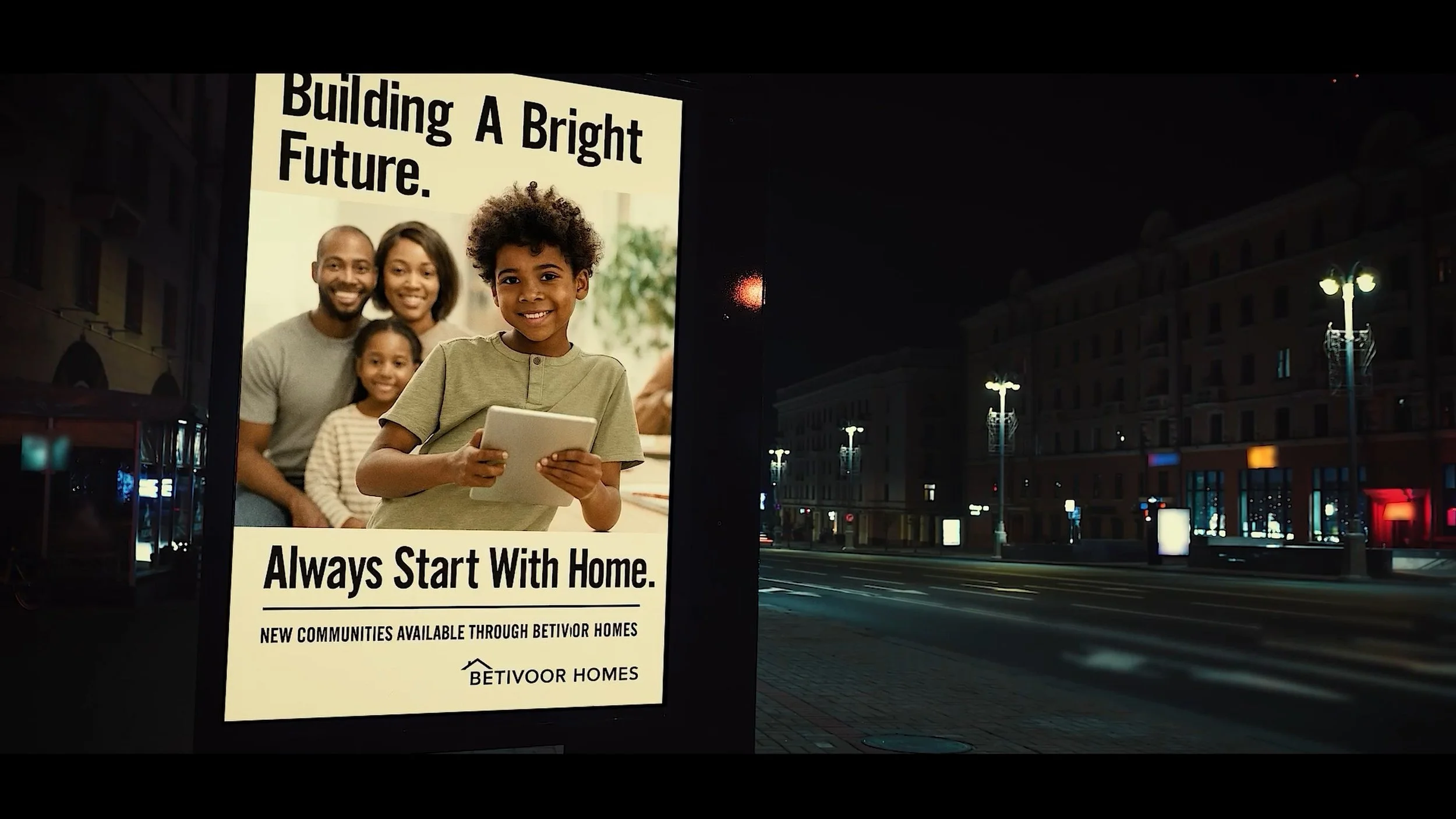
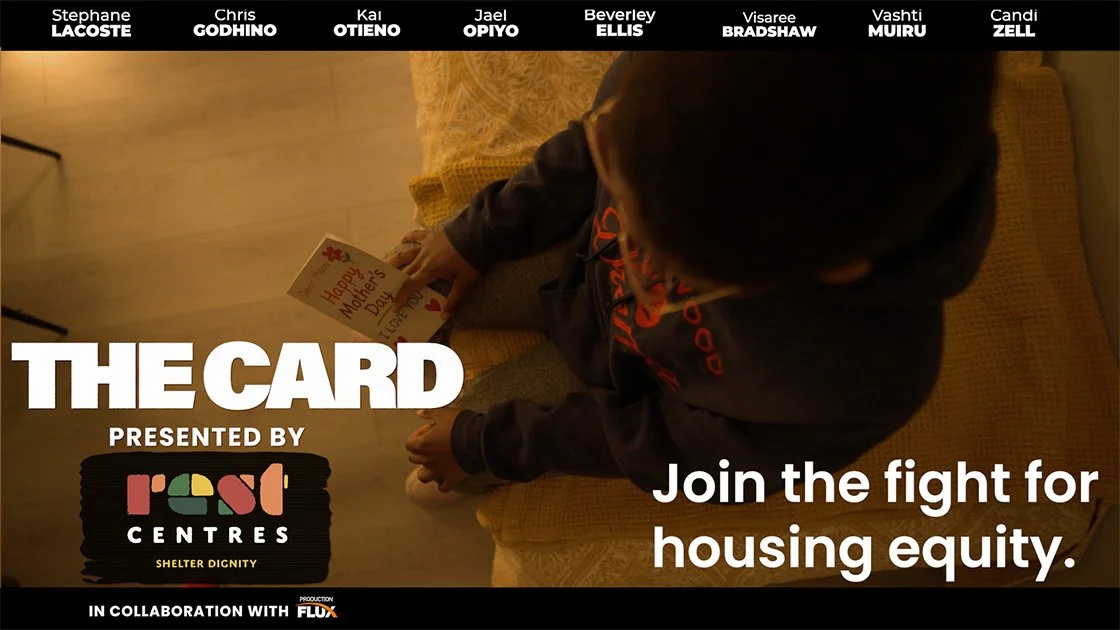
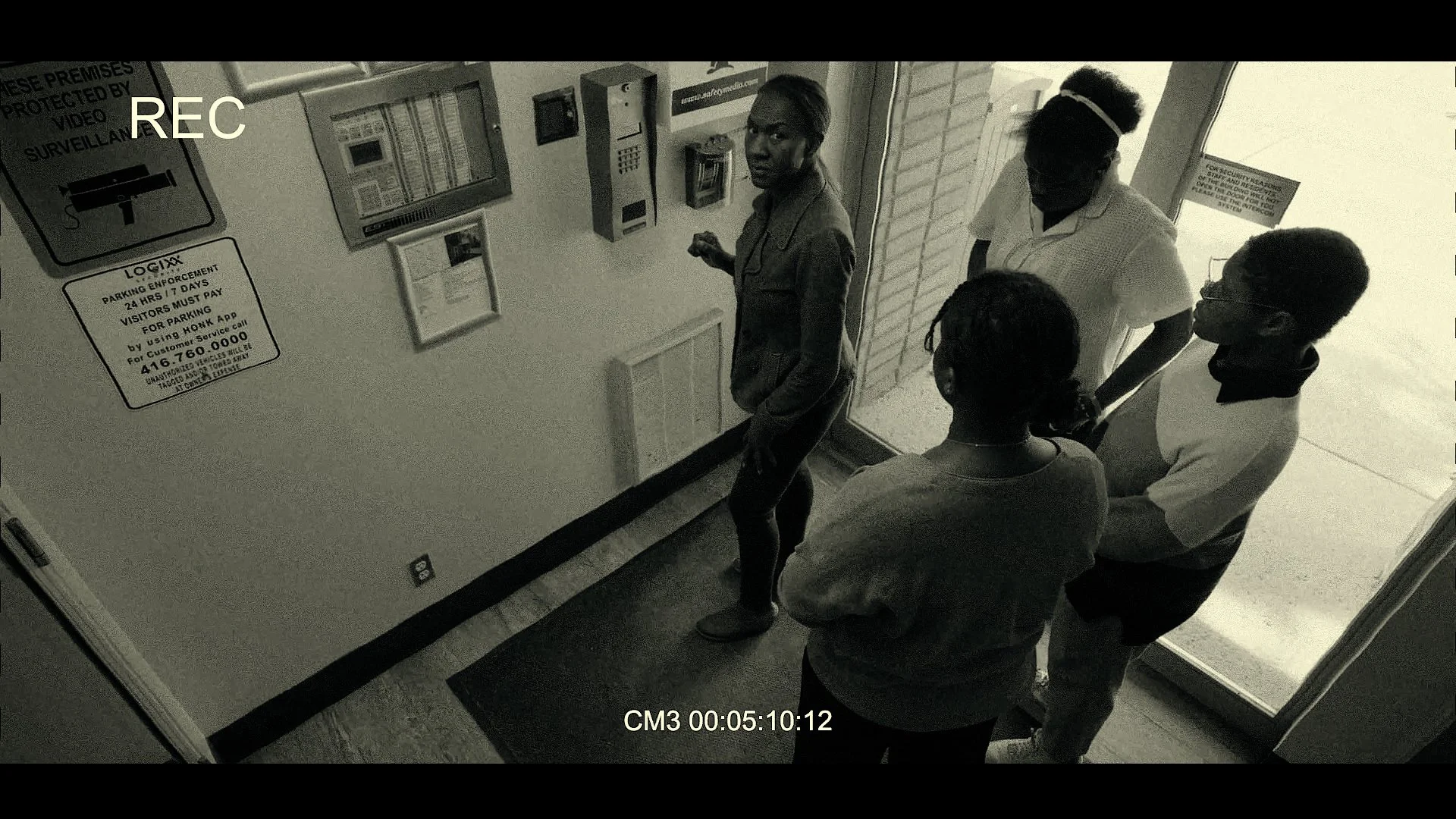
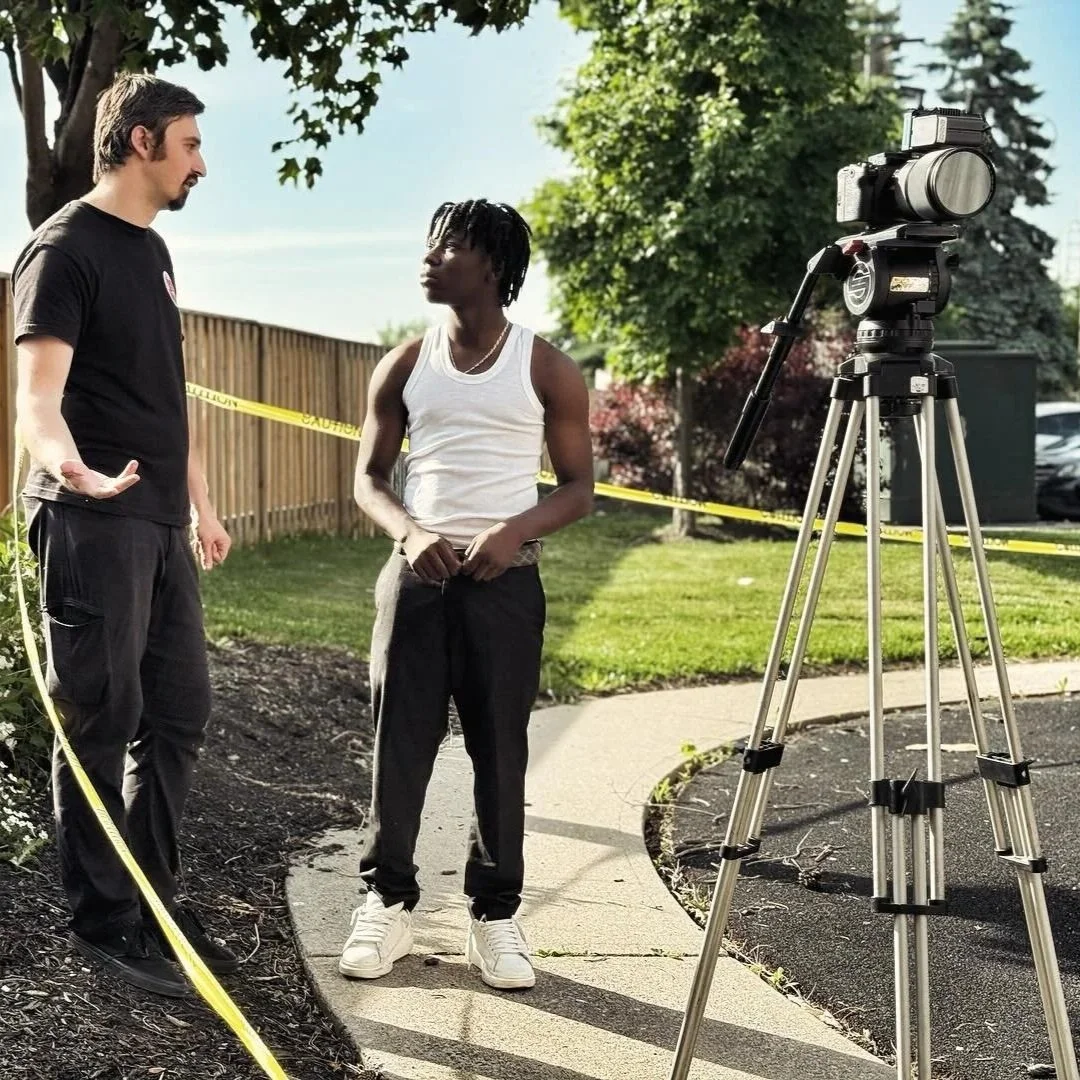
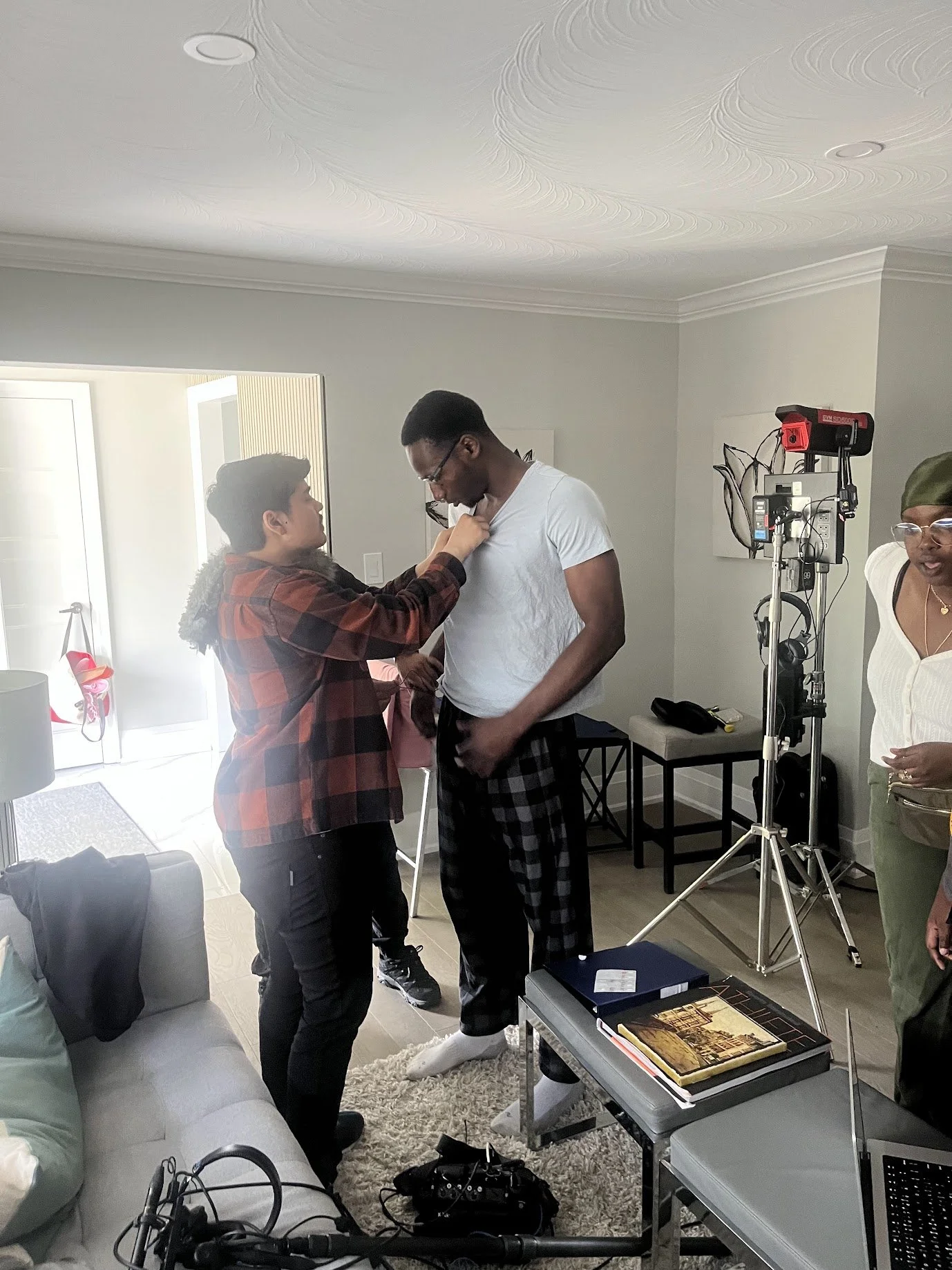
REST 2025-2026 works with racialized young people facing discrimination in the housing system. Over two months we ran a full production program with their youth — mentorship and hands-on training from working professionals first, then onto a working set alongside the writer, director and crew.
They didn't observe. They worked. Participants trained on set in lighting, camera and wardrobe, and performed on camera opposite seasoned actors. Two short films came out of it, made by young people who two months earlier had never been on a set.
That is the part a workshop cannot reach. In a classroom a young person is a student. On a set with a call sheet, a crew and a schedule, they are part of the machine — and being trusted with a job in front of people who do it professionally changes how someone sees themselves faster than anything we could tell them.
-
We collaborate with organizations that:
Advocate for change and use storytelling to shift public understanding
Work closely with young people who are rarely the authors of their own portrayal
Want to move past victim narratives toward stories of strength, leadership and resilience
Value storytelling that is ethical, visually powerful and impact-driven — made in genuine partnership with the communities it represents
-
What your organization gets
Finished short films, authored by participants and cleared for your use
A behind-the-scenes piece you own outright, for donor, impact and grant reporting
Stills and testimonial material from the same production
A documented program model, evaluated and ready to run again
Participants who leave with transferable skills, a public credit, and evidence their perspective matters
-
A typical pilot runs eight to ten weeks with ten to twelve participants — story fundamentals, then craft, then production, ending in a public screening where they introduce their own films. Shorter formats and single workshops are available.
We don't expect partner organizations to carry the cost alone. Most programs are funded jointly, with the partner as community partner of record on applications — a structure that opens doors neither of us reaches by ourselves.em description